Permaculture
Loading
What is permaculture?
Permaculture is a branch of ecological design, ecological engineering, environmental design, construction and integrated water resources management that develops sustainable architecture, regenerative and self-maintained habitat and agricultural systems modeled from natural ecosystems. The philosophy behind permaculture is based upon several different disciplines, the one most relevant to this site is organic farming, but also incorporates a number of other sustainable practices including agroforestry, sustainable development and applied ecology. For the purposes of this website, we have a strong focus on organic farming, composting, healthy soils, rainwater harvesting and water conservation.
Life Slice has a dedicated section of its website to education about the strategy of harvesting rainwater from rooftops, conveying it to a storage system and then pumping it to where it is needed. To really maximize the benefits derived from the precious water that flows onto our land and into our homes and buildings, we can also employ strategies that use the earth itself to capture and store that precious liquid.
Sculpting and preparing the earth to direct, absorb, and/or hold water is something that anyone can do. Whether their piece of land is an urban lot, a commercial building landscape, or country acreage, these strategies can often be carried out at little or no expense.
Permaculture includes a number of strategies such as:
Beavers played a critical role in North American water conservation systems. Now, with the benefit of decades of research, humans can help jump start and reinstate nature's centuries old cycles to replenish the earth's water tables and help prevent destructive erosion.
Life Slice has a dedicated section of its website to education about the strategy of harvesting rainwater from rooftops, conveying it to a storage system and then pumping it to where it is needed. To really maximize the benefits derived from the precious water that flows onto our land and into our homes and buildings, we can also employ strategies that use the earth itself to capture and store that precious liquid.
Sculpting and preparing the earth to direct, absorb, and/or hold water is something that anyone can do. Whether their piece of land is an urban lot, a commercial building landscape, or country acreage, these strategies can often be carried out at little or no expense.
Permaculture includes a number of strategies such as:
- Earth shaping
- Ponds and wetlands
- Soil building
Beavers played a critical role in North American water conservation systems. Now, with the benefit of decades of research, humans can help jump start and reinstate nature's centuries old cycles to replenish the earth's water tables and help prevent destructive erosion.
Getting Started
To help contribute to water and soil conservation, you can implement these easy measures:
1. Create bermed areas on your property that will help slow rainwater run off. This can be as simple as using some dirt to make a berm and reinforce it with dead twigs and/or branches as the beavers would have done. Piling rocks on each side will help reinforce the berm until grasses and other plants have a chance to establish a foot hold and help stabilize the berm and prevent erosion with their root structures.
2. Consider creating a pond. It could be either a small yard pond, a simple open barrel that collects rainwater if you live where you where you only have access to a balcony or patio, or create a holding tank or large pond if you have acreage.
3. By allowing sediment to collect in your pond, it will decompose and become soil. After a period of time you will occasionally want to dredge your water collection area and can use this very rich and organically created soil as an amendment to your garden soils.
1. Create bermed areas on your property that will help slow rainwater run off. This can be as simple as using some dirt to make a berm and reinforce it with dead twigs and/or branches as the beavers would have done. Piling rocks on each side will help reinforce the berm until grasses and other plants have a chance to establish a foot hold and help stabilize the berm and prevent erosion with their root structures.
2. Consider creating a pond. It could be either a small yard pond, a simple open barrel that collects rainwater if you live where you where you only have access to a balcony or patio, or create a holding tank or large pond if you have acreage.
3. By allowing sediment to collect in your pond, it will decompose and become soil. After a period of time you will occasionally want to dredge your water collection area and can use this very rich and organically created soil as an amendment to your garden soils.
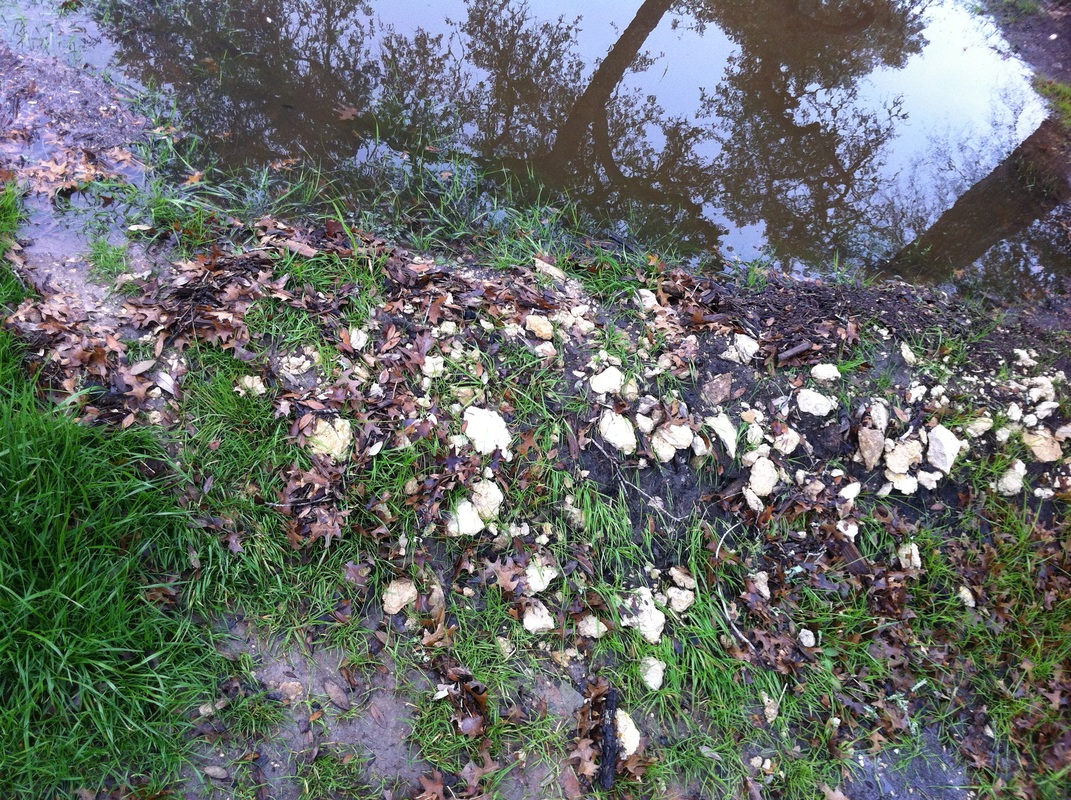
This simple berm was made using on a garden shovel and a few minutes time, yet the return on the investment in terms of increased rainwater collection has been huge.
|
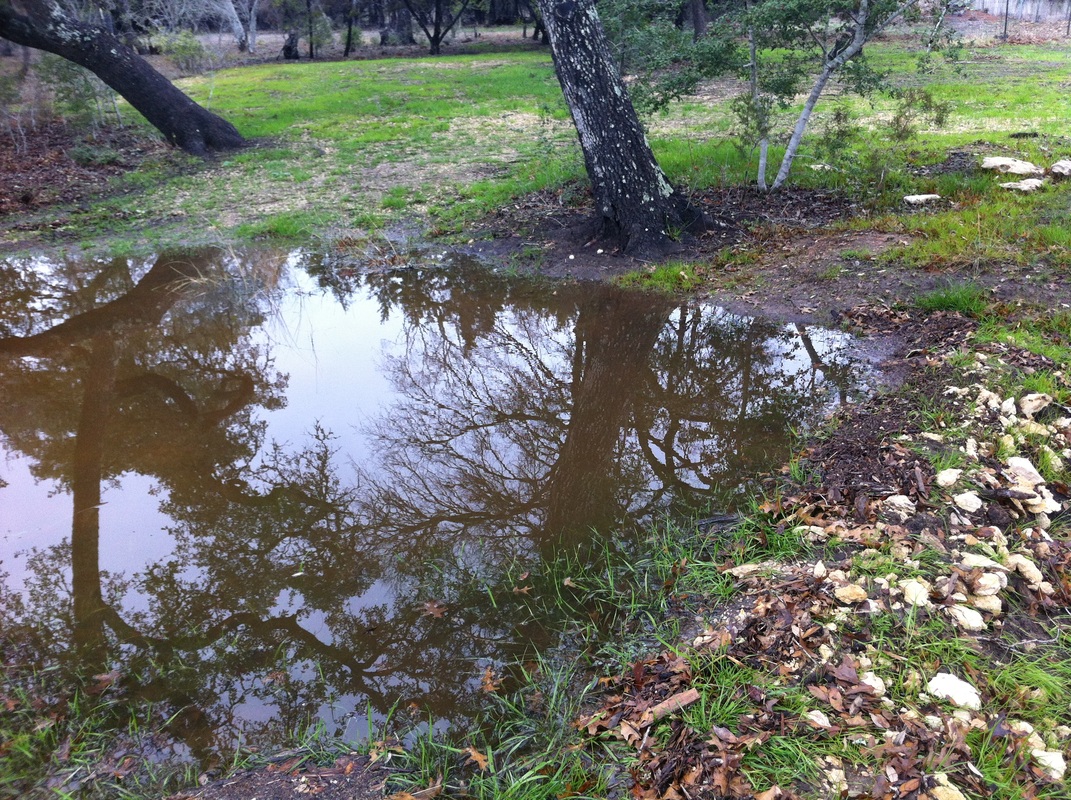
The berm allows a small water retention area to be created that significantly increases the amount of useful rainfall. This was created from 4/10" of rainfall and is allowed to slowly absorb into the soil versus running off into a nearby ditch along the road.
|
|
|
|
